Medicare Part D Plans in Michigan
Table of Contents
Medicare Part D Plans in Michigan
Medicare Part D plans in Michigan provide prescription drug coverage for anyone enrolled in Medicare. Established under the Medicare Modernization Act of 2003, Part D has been delivering coverage since January 2006. Unlike Parts A and B, which are administered directly by the federal government, Part D plans are offered by private insurance companies approved by Medicare — and the plans available to Michigan residents vary by county and zip code.
You can get Part D coverage in two ways: through a standalone Prescription Drug Plan (PDP) that pairs with Original Medicare, or through a Medicare Advantage plan that includes drug coverage (sometimes called an MA-PD). Either way, the program is designed to help reduce out-of-pocket costs for the medications you need.
What Do Michigan Part D Plans Cover?
Part D plans in MI cover a wide range of prescription medications, though the specific drugs included vary by plan. Every Part D plan must cover at least two drugs in each therapeutic category and class, and all plans are required to cover substantially all drugs in six protected classes, including cancer medications, antidepressants, and antipsychotics.
Beyond standard prescriptions, Part D also covers:
- Vaccines — including COVID-19, flu, shingles, hepatitis B, and other commercially available vaccines
- Insulin — as of the Inflation Reduction Act, insulin is capped at $35 per month under Part D
- Biosimilar drugs — biological products approved as biosimilars to reference products
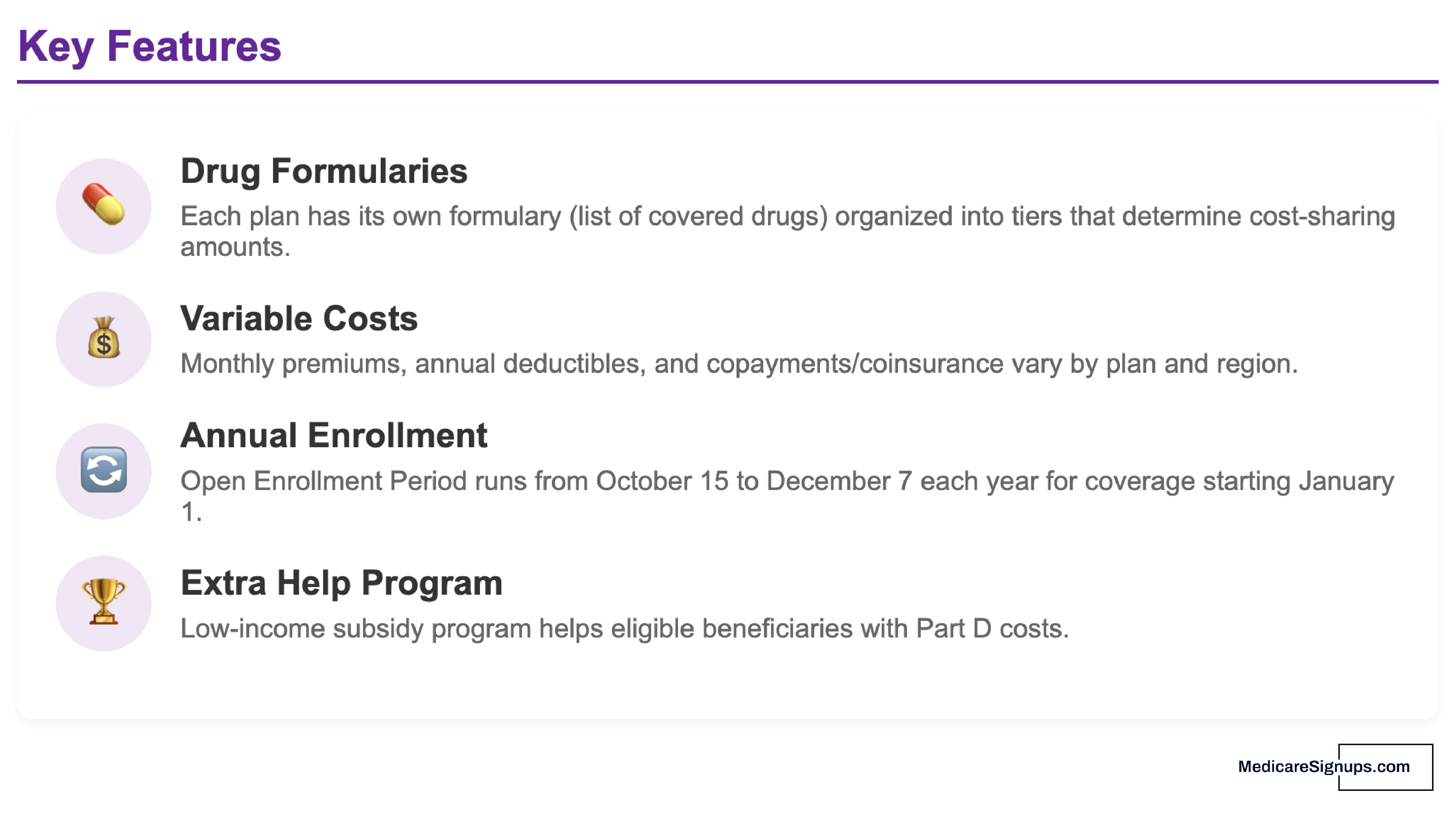
Each plan maintains a formulary (a list of covered drugs) organized into tiers, with each tier having different cost-sharing amounts. Tier placement matters more than most MI enrollees realize: the same drug can sit on tier 2 in one plan and tier 4 in another, which can dramatically change what you pay at the pharmacy counter.
"All Part D plans divide drugs into different tiers, typically one through four. Tier one is typically your preferred generics, tier two is non-preferred, tier three is preferred brand name drugs, and tier four is non-preferred brand name. Each Part D plan has a different formulary, and two different plans could have the same drug in different tiers," says Casey Ahlbum, a licensed Medicare agent in Florida. "That's why your choice of a Part D plan should always be prescription driven, based on the actual medicines that you take."
For a deeper look at what is and isn't included, see our guide on Medicare Part D coverage. You can also review what Medicare covers overall to understand how Part D fits into the bigger picture.
How Much Does Part D Cost in Michigan?
Part D costs in Michigan break down into several components, and the exact amounts depend on which plan you choose:
- Monthly premium — The national average Part D premium is approximately $35 per month in 2026, though individual plans available to MI residents range from under $10 to over $100 depending on coverage level
- Annual deductible — The maximum Part D deductible for 2026 is $615, up from $590 in 2025. Some plans in Michigan have lower deductibles or none at all
- Copays and coinsurance — After meeting your deductible, you pay a copay (flat fee) or coinsurance (percentage) for each prescription, depending on the drug's formulary tier
- The donut hole — Part D historically had a coverage gap (the "donut hole") where beneficiaries paid more out of pocket. Thanks to the Inflation Reduction Act, the donut hole has been effectively closed, with a $2,000 annual out-of-pocket cap now in place for 2025 and beyond
The closing of the coverage gap is genuinely good news, but it also changed how plans structure their costs elsewhere. According to Mike Odle, a licensed Medicare agent in Indiana, "The Inflation Reduction Act closed out the coverage gap, also known as the donut hole. To counter the new cap, most prescription drug plans have moved to a higher deductible on prescriptions, although generic drugs are still exempt from this deductible on several plans. A large number of plans are also moving to a percentage paid on name brand drugs instead of a flat copay — for example, a plan may now pay 75% for a tier 3 drug, which on a $500 retail drug leaves you with $125 out of pocket."
That shift toward coinsurance on brand-name drugs is one of the biggest reasons your real-world cost in MI can differ from what the premium suggests. Understanding all of these costs is essential when comparing plans in MI. For a full breakdown of the coverage gap and how it affects your spending, read our article on the Medicare Part D donut hole. When reviewing plan costs, it also helps to understand how to find the best Part D plan based on your specific medications and pharmacy.
Who Is Eligible for Part D in Michigan?
If you are a Michigan resident enrolled in Medicare Part A, Part B, or both, you are eligible for Part D. This includes people who qualify through:
- Age (65 and older)
- Disability (under 65 with qualifying conditions)
- End-stage renal disease (ESRD)
Enrollment in Part D is voluntary, but if you don't sign up when you're first eligible and don't have other creditable drug coverage, you may face a late enrollment penalty. Check the full details in our guides on Part D eligibility and general Medicare eligibility. If you're just getting started with Medicare, our overview of what Medicare is can help you understand the basics first.
How to Enroll in Part D in Michigan
There are specific windows during which Michigan residents can enroll in or change a Part D plan:
- Initial Enrollment Period (IEP) — A 7-month window surrounding the month you turn 65 (3 months before, your birthday month, and 3 months after). This is your first opportunity to enroll without penalty.
- Annual Enrollment Period (AEP) — Runs from October 15 through December 7 every year. During AEP, you can join, switch, or drop a Part D plan with coverage starting January 1.
- Special Enrollment Periods (SEPs) — Triggered by qualifying life events such as moving to a new area in MI, losing other drug coverage, or qualifying for Extra Help (Low Income Subsidy).
For a complete rundown of when and how to sign up, visit our guide on Part D enrollment periods. If you're new to Medicare entirely, start with our walkthrough on how to enroll in Medicare.
Standalone Part D vs. Medicare Advantage with Drug Coverage
When choosing Part D coverage in Michigan, you have two paths:
- Standalone PDP — Pairs with Original Medicare (Parts A and B). You keep the freedom to see any doctor in Michigan who accepts Medicare, and you add a separate Part D plan for prescriptions.
- Medicare Advantage with drug coverage (MA-PD) — Bundles hospital, medical, and prescription drug coverage into a single plan from a private insurer. These plans often include extra benefits like dental and vision but may restrict you to a provider network within MI. Learn more about the most common Medicare Advantage questions.
The right choice depends on your healthcare needs, preferred Michigan providers, and how much flexibility you want. Neither option is universally better — it comes down to your individual situation.
Late Enrollment Penalties
If you go 63 or more consecutive days without Part D or other creditable prescription drug coverage, you may owe a late enrollment penalty when you do sign up. The penalty is calculated as 1% of the national base beneficiary premium (which is $38.99 in 2026) multiplied by the number of full months you were without coverage.
This penalty is added to your monthly Part D premium for as long as you have Part D coverage — it doesn't go away. For example, if you went 24 months without creditable coverage, your penalty would be about $8.83 per month, every month, on top of your plan's regular premium.
One often-overlooked path to escaping that penalty is qualifying for the Extra Help program. "Extra Help, also referred to as LIS or Low Income Subsidy, is one of several Medicare Savings Programs available to individuals that fall within certain income limits," says Steve Thurmond, a licensed Medicare agent in Tennessee. "If you qualify, you will receive help on the cost of your Part D premiums, copays for your medications, and the waiving of any Part D late enrollment penalties you may currently be incurring."
To learn more about this and other Medicare penalties, including how to avoid common Medicare mistakes, review our dedicated guides.
How to Choose the Right Part D Plan in Michigan
Picking the best Part D plan in MI isn't just about finding the lowest premium. Here's what to evaluate:
- Formulary — Make sure your current medications are on the plan's drug list, and check which tier they fall under
- Pharmacy network — Confirm that your preferred Michigan pharmacy (or mail-order option) is in-network for the best pricing
- Star ratings — Medicare assigns each plan a star rating from 1 to 5. Plans with 4+ stars tend to offer better service and coverage
- Total cost — Look beyond the premium. Factor in the deductible, copays for your specific drugs, and any coverage gap costs to get a true picture of annual spending
Chasing the lowest premium is one of the most common mistakes new MI enrollees make. "The most common reason someone picks a higher premium plan is that it may place your specific medications on lower cost tiers, meaning your overall annual spending including premiums and drug costs is actually less than a cheaper plan that covers your medications poorly," says Nicholas Depke, a licensed Medicare agent in Nebraska. "The only way to know which plan truly costs you the least is to run a full comparison using your complete medication list — premiums, deductibles, copays, and pharmacy selection together — rather than choosing based on the monthly premium alone."
According to Steven Litzsinger, a licensed Medicare agent in Missouri, the cleanest way to compare plans is to think in terms of an annual total. "We help our clients identify the Total Cost of Medications for the year, using a simple formula: premiums plus prescription drug deductibles plus copays and coinsurance equals your total cost of medications. Each plan has different variables — formulary, copay tiers, pharmacy partners, and deductibles — and you can't compare plans honestly without putting all of those side by side."
The best way to find the right fit is to compare different plans using your actual prescriptions and pharmacy. Plans change every year, so it's worth reviewing your options during every Annual Enrollment Period. For a detailed walkthrough of how to evaluate and pick the best Medicare Part D plan for your needs, check out our step-by-step guide. For more frequently asked questions, check out our Part D FAQ.

Drew Bismack
Licensed Michigan Medicare Agent
Contact Drew through Medicare Agents Hub »
I help Michigan residents understand their Medicare options and make confident decisions when transitioning their health coverage. With 22+ years of experience as a licensed Medicare agent, I specialize in guiding those new to Medicare through enrollment, timelines, and plan options—without confusion or pressure.
Turning 65? I provide personalized guidance and recommendations on Medicare enrollment, Supplement plans, Medicare Advantage plans, and more, helping you choose the right plan for your needs and budget.
No-cost, no-obligation consultations.
Trusted by thousands of Michigan clients with 5-star reviews for clear, honest, pressure-free guidance.
📍 Local Michigan Medicare agent
📞 Call or text for a free consultation